Xiaomi Shifts Redmi Note 17 Focus to Longevity Over Specs
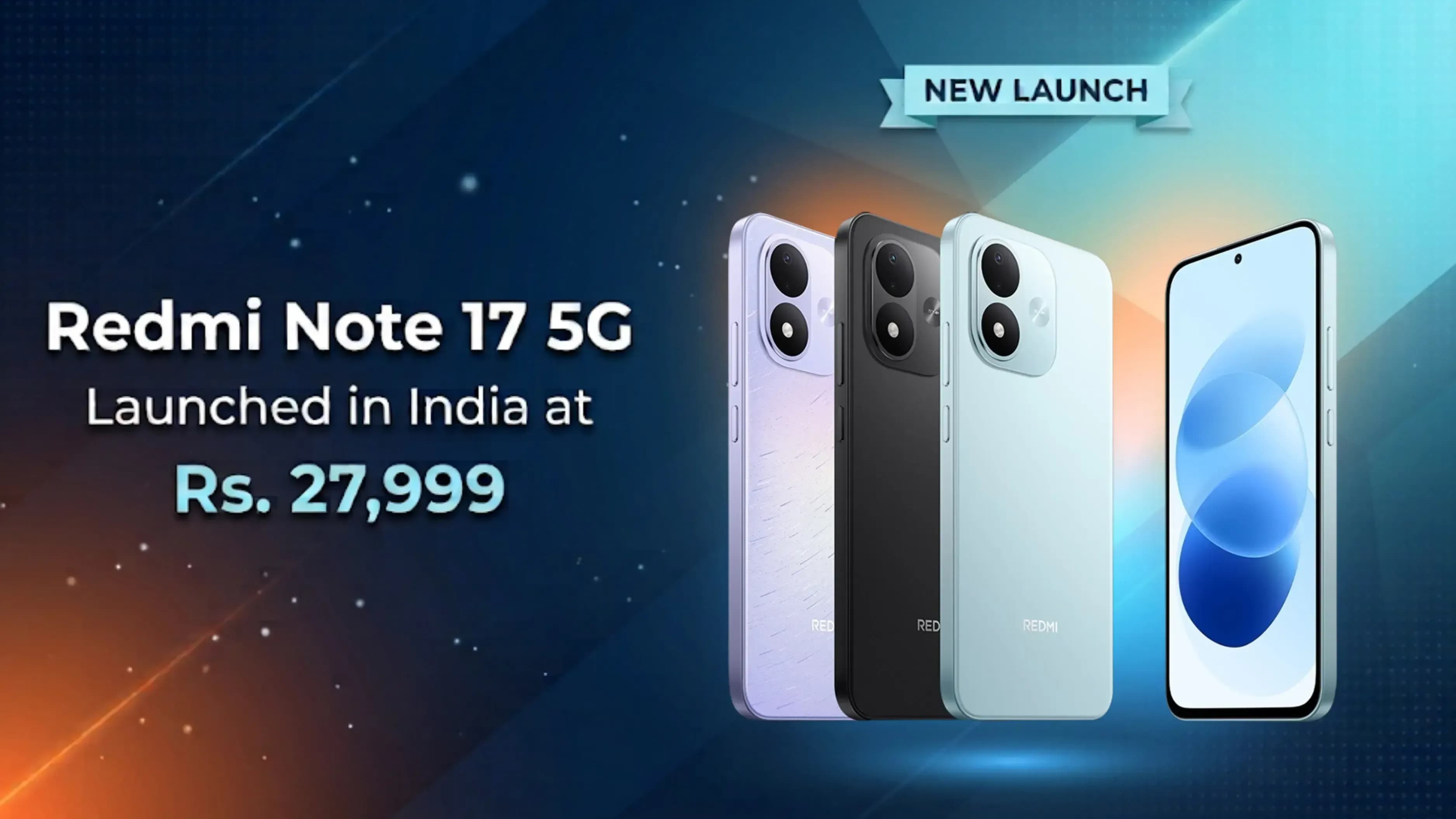
Xiaomi appears to be changing its approach to the Redmi Note series with the upcoming Redmi Note 17, putting greater emphasis on long-term usability rather than simply competing on headline specifications.
For years, the Redmi Note lineup has been associated with offering powerful hardware at competitive prices. High-resolution cameras, fast processors, large batteries and high-refresh-rate displays have helped the series become popular among value-conscious smartphone buyers.
However, the smartphone market has changed significantly. Consumers are increasingly keeping their phones for longer, making software support, durability, battery health and long-term performance more important when choosing a new device.
The Redmi Note 17 appears to reflect this shift.
Instead of relying entirely on bigger numbers, Xiaomi's new strategy could focus on making the smartphone remain useful and reliable for several years after purchase.
Redmi Note 17 Could Priorities Long-Term Value
The central idea behind Xiaomi's approach is relatively simple: a smartphone should not only perform well on launch day but should continue delivering a good experience years later.
This could make longevity one of the biggest selling points of the Redmi Note 17.
Modern smartphone buyers increasingly consider factors such as:
- How long the phone receives software updates
- How well the battery holds up over time
- Whether performance remains consistent
- Build quality and durability
- Long-term camera reliability
- Storage capacity
- Repairability and after-sales support
These factors may not create the same excitement as a new processor or a 200MP camera, but they can have a much greater impact on the ownership experience.
Why Smartphone Longevity Matters More Now
The smartphone industry has matured.
A few years ago, upgrading every two or three years was common for many users. Today, however, increasingly capable smartphones mean consumers can keep their devices for significantly longer.
Even affordable smartphones now offer displays with high refresh rates, capable cameras, 5G connectivity and processors powerful enough for everyday tasks.
As a result, manufacturers need to give customers stronger reasons to upgrade.
At the same time, consumers who purchase a new phone want to know that their investment will remain useful for years.
This is where longevity becomes important.
A phone that receives regular software updates and maintains good battery health can provide considerably more value than a device with slightly faster hardware but shorter support.
Software Updates Could Become a Major Selling Point
One of the most important components of smartphone longevity is software support.
Android smartphones have historically varied significantly in the number of years of software and security updates they receive.
However, the industry has been moving toward longer support periods.
If Xiaomi increases its software commitment for the Redmi Note 17, it could make the device considerably more attractive to buyers who want to keep their phone for three, four or even more years.
Longer software support can provide several benefits:
- Improved security
- New Android features
- Better app compatibility
- Longer device usability
- Higher resale value
- Greater overall ownership value
For consumers, this can sometimes be more meaningful than a small improvement in benchmark performance.
Battery Longevity Could Be Another Priority
Battery capacity has traditionally been one of the biggest selling points of Redmi smartphones.
However, there is a difference between having a large battery and having a battery that maintains its capacity over several years.
The Redmi Note 17 could potentially place greater emphasis on battery longevity and charging technology.
Battery health gradually decreases with repeated charging cycles. A phone that can maintain a higher percentage of its original battery capacity after years of use can provide a better long-term experience.
Advanced battery management can also help reduce unnecessary charging stress.
For heavy smartphone users, this could become one of the most practical upgrades.
Performance That Stays Consistent
Another important aspect of longevity is sustained performance.
A smartphone may deliver impressive benchmark scores when it is new, but performance can change over time because of software updates, storage usage, thermal limitations and battery degradation.
Xiaomi's focus on longevity could therefore involve improving how consistently the Redmi Note 17 performs over extended periods.
Rather than chasing the highest possible benchmark numbers, Xiaomi could priorities a balanced chipset with good efficiency and thermal management.
This approach can provide several advantages.
A more efficient processor can consume less power, generate less heat and potentially deliver more consistent performance during long-term use.
Durability Could Become More Important
Build quality is another area where manufacturers can improve smartphone longevity.
A durable smartphone is less likely to require replacement after accidental drops or exposure to everyday conditions.
The Redmi Note 17 could benefit from improvements such as stronger glass, better frame construction and improved resistance to dust and water.
Durability becomes particularly important in the budget and mid-range segments because users often expect their phones to survive years of everyday use.
A stronger body can therefore contribute directly to the phone's overall lifespan.
Xiaomi Doesn't Need to Ignore Specifications
A focus on longevity doesn't mean Xiaomi will completely abandon specifications.
The Redmi Note series is still expected to offer competitive hardware.
Consumers buying a new smartphone at this price level will continue to expect:
- A high-quality display
- 5G connectivity
- Capable cameras
- Fast charging
- Large battery capacity
- Smooth everyday performance
- Modern Android software
The difference is likely to be how these specifications are balanced.
Instead of maximizing one specification, Xiaomi could focus on creating a more balanced smartphone that performs well across several years.
Redmi Note 17 Could Follow a More Balanced Strategy
The Redmi Note series has traditionally competed aggressively on specifications.
A phone could stand out because it offered more RAM, a higher megapixel camera or a faster charging system than competing devices.
But this strategy has become harder to sustain.
Many manufacturers now offer similar specifications at comparable prices.
For consumers, the differences between smartphones are becoming increasingly difficult to identify from specification sheets alone.
A focus on longevity could therefore give Xiaomi another way to differentiate the Redmi Note 17.
Rather than asking customers to buy the phone because it has the biggest numbers, Xiaomi could promote it as a smartphone designed to remain useful for longer.
What This Could Mean for Indian Buyers
India is one of the world's largest smartphone markets, and price remains a major consideration for consumers.
However, Indian buyers are also becoming more aware of long-term ownership costs.
A smartphone may initially appear cheaper, but replacing it after two years can make it more expensive over time.
A longer-lasting device can potentially offer better value.
For Indian consumers, features such as battery life, durability, software updates and after-sales service can therefore play a significant role in the purchasing decision.
The Redmi Note 17's longevity-focused strategy could resonate particularly well with buyers who don't want to upgrade their smartphones frequently.
Longevity Could Improve Resale Value
Longer software support could also help the Redmi Note 17 retain its value.
Used smartphone buyers increasingly look for devices that still receive security updates and support modern applications.
A phone with several years of software support remaining can therefore be more attractive in the second-hand market.
This could make longer support a financial advantage for the original owner as well.
For consumers who regularly sell their old smartphone before upgrading, this is an important consideration.
Redmi Note 17 vs the Traditional Redmi Note Formula
The traditional Redmi Note formula can be summarized as:
More specifications + aggressive pricing = strong value.
The new strategy could instead become:
Good specifications + long-term reliability + software support = better ownership value.
That may not sound like a dramatic change, but it could represent an important evolution for Xiaomi.
The company doesn't necessarily need to stop offering competitive hardware. Instead, it can complement that hardware with features that matter after the first year of ownership.
Will Premium Buyers Care?
The longevity strategy could also influence buyers who are willing to spend more.
Premium smartphone customers increasingly expect long software support and reliable hardware.
While the Redmi Note 17 remains positioned below Xiaomi's flagship smartphones, improvements in longevity could make the device more appealing to users who want a dependable secondary or primary smartphone.
For premium buyers, however, camera performance, processor capability and display quality will still matter.
The success of Xiaomi's strategy will depend on whether the Redmi Note 17 can combine longevity with competitive hardware.
What Buyers Should Look For
If Xiaomi is genuinely shifting the Redmi Note 17 toward long-term ownership, consumers should pay attention to more than its launch specifications.
Before buying, prospective customers should look at:
1. Software Support
Check the number of Android version upgrades and security updates promised by Xiaomi.
2. Battery Warranty and Health
Look at charging technology, battery durability and warranty coverage.
3. Processor Efficiency
A powerful but efficient chipset can be better for long-term use than a processor focused entirely on peak benchmark performance.
4. Build Quality
Look for stronger materials and official dust or water resistance.
5. Storage
Choosing sufficient storage at purchase can prevent the need to upgrade sooner.
6. Repair Support
Availability and cost of replacement parts can significantly affect the total cost of ownership.
The Bigger Smartphone Industry Trend
Xiaomi's reported change in strategy reflects a broader trend across the smartphone industry.
Manufacturers are increasingly competing on software support, sustainability, durability and long-term ownership.
As smartphone hardware becomes more mature, it is becoming harder for manufacturers to deliver revolutionary improvements every year.
A slightly faster processor or higher-resolution camera may not be enough to convince existing users to upgrade.
Longer device lifespans can therefore become an important selling point.
What to Expect From the Redmi Note 17
Until Xiaomi officially confirms the complete specifications and long-term support policy for the Redmi Note 17, buyers should treat individual rumours and leaks carefully.
The most important information will include the phone's processor, battery technology, software-update commitment, durability rating, camera hardware and pricing.
If Xiaomi can deliver competitive specifications while significantly improving longevity, the Redmi Note 17 could become an interesting option in India's highly competitive mid-range smartphone market.
Final Verdict
The Redmi Note 17 could represent a significant change in Xiaomi's smartphone strategy.
Instead of competing purely through headline specifications, the company appears to be placing greater importance on what happens after the initial purchase.
Longer software support, better battery longevity, improved durability and consistent performance could make the phone more valuable over several years.
For consumers, this is a welcome direction.
Specifications will always matter, but a smartphone that remains fast, secure and reliable for longer can ultimately provide better value than one that simply wins the specification race at launch.
If Xiaomi successfully combines its traditional value-for-money approach with a stronger focus on longevity, the Redmi Note 17 could set a new direction for the Redmi Note family—and potentially influence how other manufacturers approach affordable and mid-range smartphones in the years ahead.